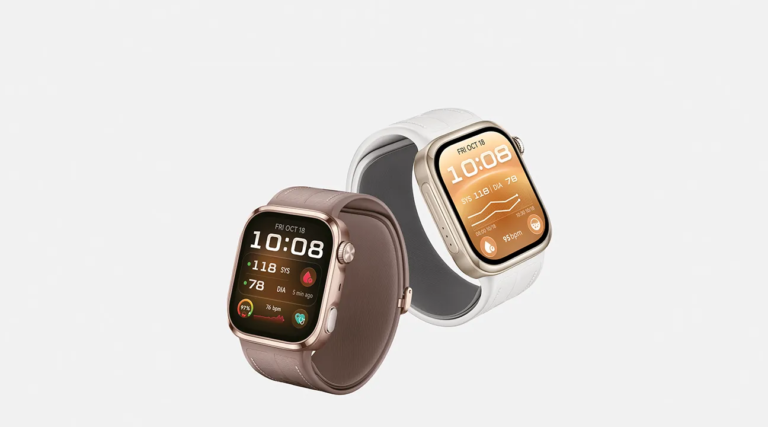
An ECG recording and a blood pressure measurement answer different questions. The ECG captures the electrical activity of the heart across a short window, revealing rhythm and, with clinical interpretation, possible atrial fibrillation or other arrhythmias. Blood pressure, measured through an inflatable cuff, reflects the pressure of blood against the arterial walls at that moment. Each signal is useful on its own, but together they offer a richer picture of cardiovascular health than either alone.
The two signals reflect different parts of the same system. ECG reveals how the heart is being electrically paced; blood pressure reveals the resulting mechanical load on the vessels. A person can have a regular rhythm and elevated pressure, or an irregular rhythm with normal pressure, and each combination points toward different conversations with a clinician. Tracking both over time, rather than relying on one, gives a much more complete picture of cardiovascular status.
Consider a typical scenario. A wearer notices a slightly irregular pulse during the day and pauses for a short ECG recording on the wrist. The trace is stored and can be reviewed later, either by the wearer or, when appropriate, by a clinician. Separately, on a morning when blood pressure feels elevated, an inflatable cuff measurement is taken and recorded against the time and recent activity. Over weeks, the wearer can look back and see whether rhythm observations and pressure readings move together, and whether either correlates with poor sleep, high stress or heavy training.
Contemporary watches for heart monitoring increasingly pair on-demand ECG recording with blood pressure measurement, giving wearers a broader view than either signal alone. Add continuous pulse tracking, overnight heart rate variability and sleep staging, and the wrist becomes a compact observatory for everyday cardiovascular trends. The context matters enormously: a reading taken after a stressful meeting means something different from the same number taken after a calm breakfast. A clinician-led explanation of exercise and blood pressure readings develops this point in detail, arguing that the most useful question is rarely the number itself but when it was taken and what surrounded it.
It is essential to remember that these devices support awareness rather than diagnosis. ECG traces captured on the wrist are not interpreted automatically as a medical result, and blood pressure readings on the wrist are not a substitute for formal assessment. When something looks unusual, the appropriate next step is always a conversation with a qualified healthcare professional. Wearable data is most powerful when it starts that conversation with a few weeks of context already in hand.
Used within those boundaries, the combination of ECG and blood pressure on the wrist creates a gentle, continuous feedback loop that helps wearers understand their own cardiovascular rhythms and engage proactively with their long-term health. Over months, that loop turns vague concerns into specific, discussable observations, and supports a much more informed kind of partnership with the healthcare system.
Heart rate variability, derived from the same pulse sensors used for the ECG, adds a third dimension. It reflects the balance of the autonomic nervous system and shifts with stress, recovery and illness. When viewed alongside the ECG and blood pressure, it helps explain why a given reading looks the way it does: a high-pressure morning with low HRV is likely a stress-driven day, while the same pressure with healthy HRV may simply reflect ordinary activity. The three signals together tell a more coherent story than any one alone.
Calibration against clinic-grade equipment is worth doing sensibly. A wrist device does not need to match a sphygmomanometer to the millimetre, but a few comparison readings at home, taken under similar conditions, give the wearer confidence that the numbers on the wrist are tracking their real cardiovascular trends. Over time, the device becomes a companion to formal measurement rather than a replacement for it, and the relationship between home data and clinic data is well understood.
It is worth remembering that ECG traces on a wrist device are a screening tool, not a diagnostic one. They are designed to prompt awareness and to support a conversation with a clinician, who can then arrange more detailed assessment if needed. That framing is healthy: it allows the wearer to use the feature without becoming preoccupied with every waveform, and to treat the information as one useful input among several rather than as a verdict.
ECG and blood pressure, measured on the same wrist and viewed on the same timeline, offer a more complete picture than either signal alone. That combined picture supports earlier awareness, better conversations with clinicians and a calmer, more informed approach to long-term cardiovascular health. For wearers, the practical result is a quieter, more grounded sense of how the heart and vessels are actually doing, day after ordinary day, without the drama of isolated readings and without the guesswork.
About the Author